
Autonomous cargo mobility is no longer just a future concept. It is steadily becoming a practical answer to one of the biggest challenges in modern transport and logistics: how to move goods more safely, efficiently, and intelligently in environments that are increasingly complex and fast-paced.
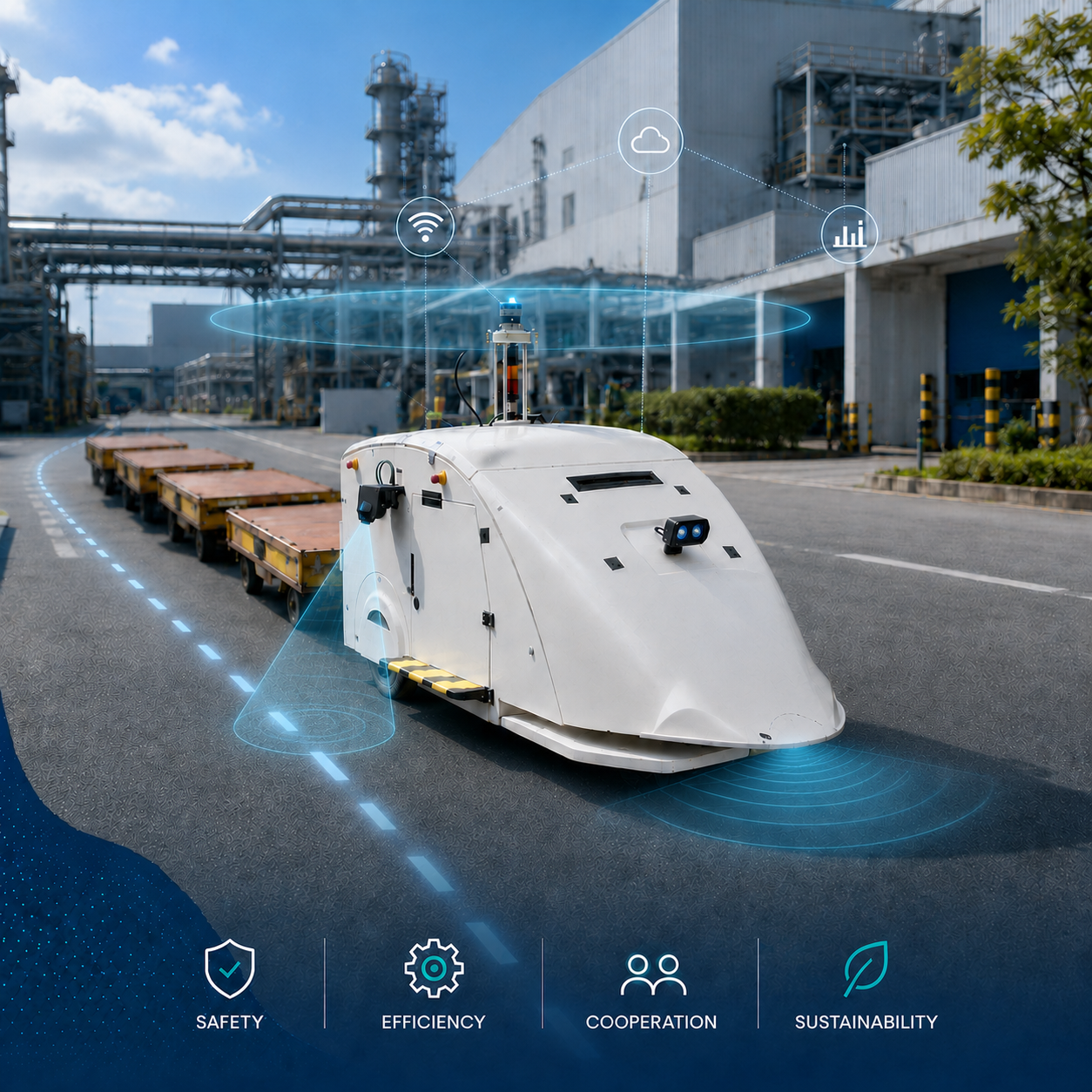
Across factories, logistics hubs, industrial campuses and even urban areas, the demand for flexible and reliable cargo movement continues to grow. Autonomous carriers can help meet this need by reducing repetitive manual operations, supporting smoother material flows, and improving the continuity of day-to-day activities. Whether they are transporting components across production sites, moving goods through transport terminals, or enabling new forms of last-mile and service delivery, these systems have the potential to make cargo transport more adaptive, more predictable, and better integrated with the wider mobility ecosystem.
At the same time, the real value of autonomous cargo systems depends on their ability to perform beyond controlled or ideal settings. Real-world environments are dynamic, with changing routes, mixed traffic, people, unexpected obstacles and varying connectivity or positioning conditions. For autonomous cargo mobility to scale successfully, it must be robust, cooperative, and resilient enough to respond to this complexity without compromising safety or efficiency. This is why initiatives like FRODDO matter.
By exploring connected and cooperative mobility solutions under realistic conditions, such projects help build the knowledge, technologies and system-level approaches needed to support the safe and scalable movement of goods. In that sense, autonomous cargo mobility is not only about automation itself, but about shaping a smarter and more dependable transport future for industry, infrastructure, and cities alike.
Authors: Sinan Arca, Uygar Yengin